
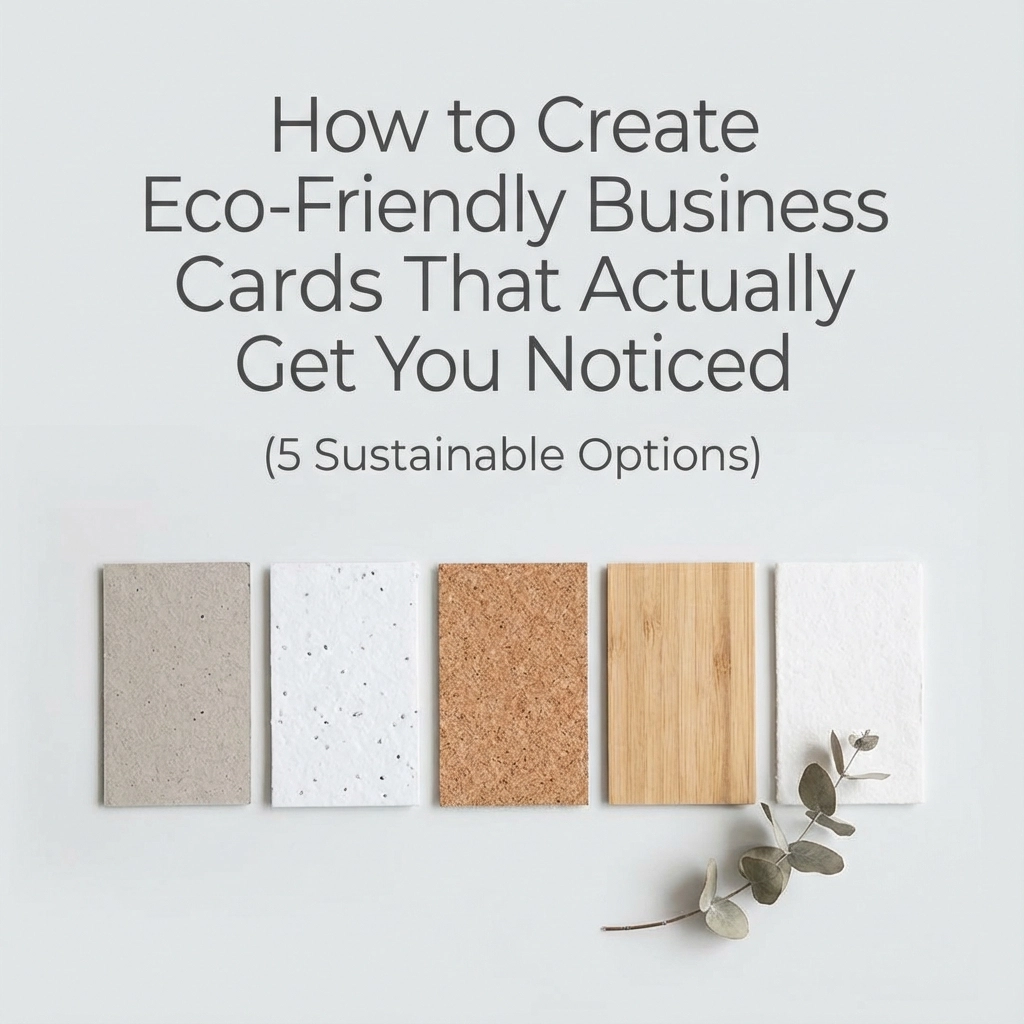
In today's environmentally conscious business landscape, your choice of business card material speaks volumes about your brand values. With 66% of consumers more likely to engage with brands making sustainability efforts, eco-friendly business cards aren't just good for the planet, they're smart business strategy.
The challenge isn't just choosing sustainable materials; it's creating cards that capture attention and leave lasting impressions. The good news? Sustainable doesn't mean sacrificing style or memorability. In fact, many eco-friendly options offer unique textures and visual appeal that traditional cards simply can't match.
Why Eco-Friendly Business Cards Matter More Than Ever
Traditional business card production contributes significantly to deforestation, chemical pollution, and landfill waste. The average business professional goes through hundreds of cards yearly, and with millions of businesses worldwide, the environmental impact adds up quickly.
Beyond environmental benefits, sustainable business cards offer distinct advantages for your brand:
- Immediate differentiation from competitors using standard materials
- Conversation starters that naturally lead to meaningful business discussions
- Brand alignment with increasingly important sustainability values
- Tactile experiences that create stronger memory associations
- Cost-effectiveness when you consider the enhanced response rates and brand recall

5 Sustainable Business Card Options That Command Attention
1. Post-Consumer Recycled Paper
Post-consumer recycled paper represents the most accessible entry point into sustainable business cards. Made from paper that's already completed its lifecycle, magazines, newspapers, office paper, this material diverts waste from landfills while requiring less energy and water to produce than virgin paper.
Visual Appeal: Natural texture with subtle flecks and variations that give each card character. The uncoated surface provides excellent print quality while feeling substantial and authentic.
Best For: Professional services, consulting firms, and businesses wanting to communicate reliability with environmental consciousness.
Getting Noticed Factor: The natural texture immediately signals sustainability without being overtly "earthy." Clients notice the quality feel while subconsciously registering your environmental commitment.
2. Bamboo Fiber Cards
Bamboo grows incredibly fast, up to three feet in 24 hours, making it one of the most renewable resources available. Bamboo fiber cards offer remarkable durability while maintaining an elegant, clean appearance.
Visual Appeal: Smooth, premium feel with subtle natural grain patterns. Available in natural off-white or can be processed to pure white for vibrant color printing.
Best For: Tech companies, creative agencies, wellness businesses, and luxury brands emphasizing innovation and sustainability.
Getting Noticed Factor: The unique smoothness combined with surprising durability creates a premium impression. Recipients often comment on the distinctive feel, opening natural conversations about your brand values.

3. Seed Paper (Plantable Cards)
Perhaps the most conversation-starting option, seed paper cards are embedded with flower, herb, or vegetable seeds. After serving their networking purpose, recipients can plant the entire card and watch it grow into actual plants.
Visual Appeal: Rustic, textured surface with visible seeds creating visual interest. Natural color variations and organic feel that's impossible to replicate with conventional materials.
Best For: Landscaping companies, environmental organizations, wellness brands, restaurants featuring local produce, and any business wanting maximum memorability.
Getting Noticed Factor: Impossible to ignore or forget. Recipients keep these cards longer, often displaying them before planting. The growing plants serve as ongoing brand reminders for months.
4. Hemp Blend Paper
Hemp requires significantly less water and land than traditional paper sources while producing stronger, more durable fibers. Hemp blend cards offer exceptional longevity and a distinctive texture.
Visual Appeal: Soft, slightly textured surface with natural fiber visibility. Takes ink beautifully while maintaining an organic, artisanal quality.
Best For: Artisan brands, craft businesses, organic food companies, and creative professionals who want to emphasize natural quality and durability.
Getting Noticed Factor: The subtle texture and durability make these cards feel more substantial than typical options. The natural fiber patterns create visual interest that draws the eye.
5. Cotton Fiber Cards
Made from cotton linters: the short fibers that cling to cotton seeds after ginning: cotton cards are 100% tree-free and naturally soft to the touch.
Visual Appeal: Exceptionally smooth, luxurious feel with excellent print receptivity. Available in various weights and can achieve bright white appearance for maximum color vibrancy.
Best For: High-end professional services, luxury brands, financial services, and businesses where premium quality impression is crucial.
Getting Noticed Factor: The incredibly soft, almost fabric-like texture immediately communicates premium quality. Recipients notice the difference immediately upon touch.

Design Strategies That Maximize Impact
Embrace Natural Color Palettes
Sustainable materials often look best with earth tones, muted colors, and designs that complement rather than fight the natural texture. Consider:
- Deep forest greens and ocean blues
- Warm browns and golden yellows
- Clean whites and soft grays
- Rich burgundies and natural teals
Leverage Texture as Design Element
Instead of adding embossing or special effects, let the natural texture of your chosen material serve as a design element. Simple, clean layouts often work better on textured surfaces than complex designs.
Choose Sustainable Inks
Complement your eco-friendly material with soy-based or vegetable-based inks. These inks produce vibrant colors while being more environmentally friendly than petroleum-based alternatives.
Best Practices for Maximum Effectiveness
Order Quantities Mindfully
Sustainable materials often cost 10-30% more than conventional options, making mindful ordering important. Calculate your actual networking needs rather than ordering large quantities "just in case."
Optimize Distribution Strategy
Hand your eco-friendly cards to meaningful connections rather than distributing broadly. This selective approach reinforces your sustainability commitment while ensuring your investment reaches genuinely interested prospects.
Include Your Sustainability Story
Consider adding a subtle note about your card choice on the reverse side: "This card is made from recycled materials and can be recycled again" or "Plant this card to grow wildflowers." This educates recipients while reinforcing your values.

Making the Investment Work
While eco-friendly business cards require higher upfront investment, they typically generate better response rates due to their memorable nature and positive brand associations. Many businesses report that sustainable cards spark longer conversations and create stronger initial impressions.
Consider these cards as marketing investments rather than simple contact information carriers. When recipients keep, display, or even plant your cards, you're creating extended brand exposure that traditional cards rarely achieve.
The key to success lies in choosing materials that align with your brand personality while serving your networking goals. Whether you select the accessibility of recycled paper, the innovation story of bamboo, or the unforgettable experience of plantable seeds, your choice communicates values before you even speak.
Ready to make your business cards work harder for your brand and the environment? Explore our sustainable business card options and discover how eco-friendly choices can elevate your professional image while supporting your values.